

Happiness Takes Making
Well-being doesn’t come from comfort alone, but from effort, meaning, and the things we create for others

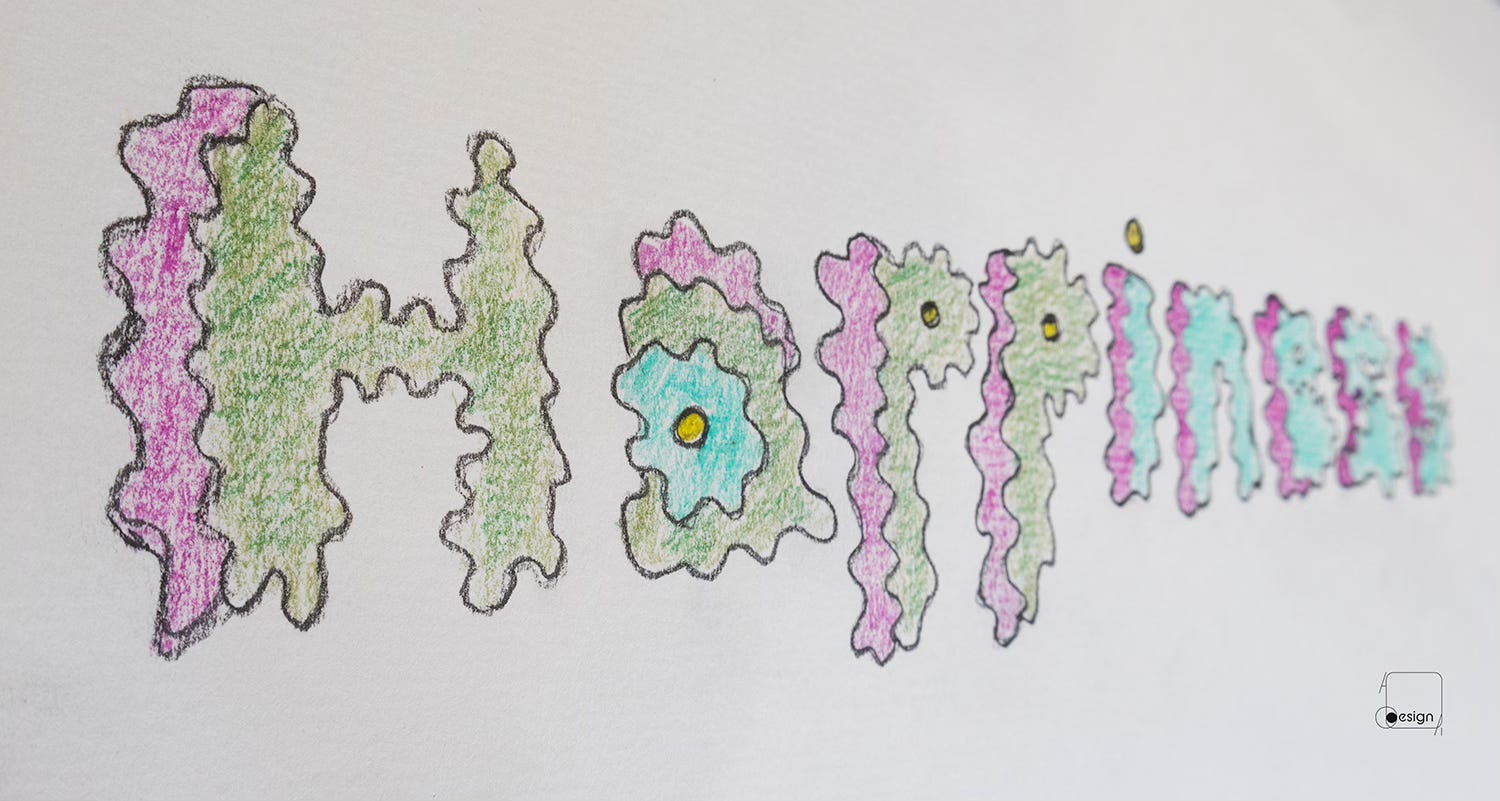
Hand-drawn Ada Design
Note to readers: The story/article/text is presented first in English, followed by the original Romanian version.
Notă pentru cititori: Povestea/articolul/textul este prezentat mai întâi în limba engleză, urmat de versiunea originală în limba română.
At last, I settle into my favorite corner of the couch. It’s already evening. The dishes are in the dishwasher, the groceries are put away, the meal prep is done, the clothes are out of the dryer, and a few more work tasks have been crossed off the list.
Evening is my hour of exhale, the moment when my mind can wander elsewhere – to happiness, for instance. And yes, I do feel happy. But I also realize I’ve spent the whole day working for that happiness.
Happiness is notoriously hard to define. It means something slightly different to everyone. There is, after all, a difference between moments of happiness – those flashes brought on by pleasure, comfort, or positive emotion – and a deeper sense of well-being, the kind that comes from being, on the whole, at peace with many parts of your life.
That kind of happiness does not simply drift my way while I spend the day curled up in my corner of the couch, watching baby videos on my phone – although, to be fair, I find them wildly entertaining. This kind of happiness asks something of me. It asks me to do things. And whenever I think about that, I think of my mother.
Looking back on the years when we used to gather at my parents’ house every Saturday for lunch, I can now see how much effort went into bringing us all together – partners, children, the whole expanding family – so we could share those precious hours around the same table. The shopping for Saturday’s meal began as early as Wednesday, and by Thursday, my mother had already mapped out what she would cook and how. She kept track of who didn’t like garlic, who couldn’t stand cheese, which grandchild wanted schnitzel and which one wanted meatballs, and so on. She worked for hours on those meals, and yet she would not have given them up for anything in the world. The tradition began after each of us had left home, and it lasted for years. It still does, especially around the holidays, when we manage to all come together. If you asked my mother, she would probably tell you those meals are part of what a lifetime of happiness has meant to her.
Everything we value asks something of us: our relationships, our health, our work and, with it, the financial security it brings; our contribution, however modest, to a better world; even the small daily acts required to keep the fragile balance of our little universe intact.
We set goals. We work toward them. And perhaps most importantly, we want our lives to mean something. We want to be useful. Without a sense of purpose, it becomes very hard to understand what we are doing here at all.
And yet, things seem to be shifting, and we still don’t know what shape those shifts will take.
The new technological age we have entered is producing a fresh set of arguments, from bleak predictions – the disappearance of many jobs as we know them, and the inability of many people to adapt or retrain for something new – to utopian promises of widespread prosperity in a world where work may no longer be necessary.
In A World Without Work, the economist Daniel Susskind argues that work gives us more than an income; it gives us meaning. The threat of technological unemployment is not merely economic. It is also deeply human. Work offers direction, significance, the sense that one has a place and a role to play.
You can see this clearly in people who retire. Some fall into depression. Others resist retirement altogether – the familiar figures who go on teaching, go on seeing patients, go on showing up. Which is to say: this is not just about money. Earning money is often one way of expressing care, of contributing to the well-being of those closest to us, of proving that we matter within our own tribe.
There are countless studies on all of this. What I wanted to do here was simply to place a feeling in perspective: that tension between exhaustion and the quiet satisfaction of having contributed something. And also, to gesture toward what may be coming – an unfamiliar world in which we may have to rethink our purpose, our usefulness, perhaps even our definition of happiness itself. The psychological effort of staying balanced may become greater than ever.
It is all a bit complicated, so I return to the present moment and allow myself a different kind of happiness – one easier to consume, and easier to explain – in the form of a piece of chocolate. Then I sink back into my corner of the couch, from which this is about all I have to report.
Fericirea se face
Sentimentul de bine nu vine doar din confort, ci mai ales din efort, sens și lucrurile pe care le construim pentru ceilalți
În sfârșit, mă așez în locul meu preferat de pe canapea. E deja seară, vasele sunt în mașina de spălat, cumpărăturile aranjate în frigider, pachetele cu mâncare pregătite, hainele scoase din uscător și noi task-uri din proiectele de job bifate.
Seara e momentul meu de respiro, în care am timp să mă gândesc un pic la altceva… la fericire, de exemplu. Și, da, mă simt fericită, dar realizez și că am muncit toată ziua pentru fericirea asta.
Fericirea e un concept greu de definit; primul gând al fiecăruia poate indica ceva diferit. Plus, e o diferență între momente de fericire (date de plăcere, confort, emoții pozitive) și o stare generală de bine pe care o ai când, în principiu, ești mulțumit cu multe aspecte din viața ta.
Genul acesta de fericire nu îmi dă târcoale, așa, pur și simplu, stând în locul meu preferat pe canapea toată ziua și privind în telefon la video-uri cu bebeluși (deși, trebuie să recunosc, mă amuză foarte tare). Fericirea asta cere să fac lucruri. Și îmi vine în minte cel mai bun exemplu… acela al mamei.
Privind în urmă, la anii în care mergeam la părinți la masă în fiecare sâmbătă, îmi dau seama cât efort depuneau ei să fim toți acolo, cu parteneri de viață și copii, să avem acele momente prețioase împreună. Începeau să facă cumpărături pentru masa de sâmbătă încă de miercuri, iar joi mama deja avea planificat ce și cum să gătească. Lua în calcul că unuia nu-i plăcea usturoiul, altul nu suporta brânza, un nepot voia șnițele, iar altul chifteluțe și tot așa… Muncea ore în șir pentru masa asta, dar n-ar fi renunțat la ea pentru nimic în lume. Tradiția a fost instaurată după ce am plecat fiecare de acasă și a continuat ani și ani la rând. Continuă și acum, în special de sărbători, când reușim să ne adunăm toți. Dacă o întreb pe mama, pentru ea, mesele astea sunt parte din fericirea ei de o viață.
Tot ce are valoare pentru noi cere efort: relațiile pe care le avem, sănătatea noastră, cariera și, implicit, câștigurile financiare, contribuția, într-un fel sau altul, la o lume mai bună, și chiar micile lucruri pe care le facem zilnic ca să menținem echilibrul micului nostru univers.
Ne setăm obiective, ne străduim să le atingem și, foarte important, vrem ca viața noastră să aibă un sens, să fim utili. Fără un sens, nu prea înțelegem ce e cu noi pe aici.
Totuși, lucrurile par să se schimbe și încă nu știm cum o să se așeze.
Noua eră tehnologică în care am intrat dă naștere unor noi dezbateri de la cele pesimiste – dispariția multor joburi așa cum le știm astăzi, cu imposibilitatea multora de a se adapta unui nou stil de a munci sau de a învăța să facă altceva – până la unele extra-optimiste – promisiunea unei bunăstări generalizate în care nu va mai fi nevoie să muncim.
Economistul Daniel Susskind scrie în A World Without Work că munca nu ne oferă doar venit, ci și sens, iar riscul șomajului tehnologic nu e doar economic, ci și profund uman: „Un job nu e doar o sursă de venit, nu e atât de simplu. Munca dă vieții un sens, o direcție… Amenințarea șomajului tehnologic are această latură – vor lipsi pe mulți oameni nu numai de venitul financiar, ci și de sentimentul că sunt utili, că au un rost; va aduce un gol imens nu numai în piața muncii, ci și în viețile oamenilor”, scrie el.
Fenomenul e ușor de observat în special în cazul persoanelor care ies la pensie. Unii cad în depresie, alții pur și simplu refuză să se pensioneze – este bine cunoscut fenomenul profesorilor care continuă să predea, al medicilor care continuă să vadă pacienți etc. Așadar, nu e vorba doar despre bani, iar câștigurile financiare sunt deseori expresia modului în care poți contribui la bunăstarea celor dragi, a faptului că ești util în “tribul” tău.
Există zeci de studii despre toate astea. Eu am vrut doar să pun în perspectivă ceea ce simt — contradicția dintre oboseală și mulțumirea de a fi contribuit cu ceva — și ceea ce poate urma: o lume necunoscută, în care va trebui să ne regândim scopul și utilitatea, poate chiar să redefinim termenii fericirii. Probabil că efortul psihologic de a ne menține echilibrul va fi din ce în ce mai mare.
Mi-e clar că e complicat, așa că revin cu gândul la „acum”, și îmi ofer un alt fel de fericire, ușor de înghițit și de explicat, materializată într-o bucățică de ciocolată. Și mă cufund în colțul meu de canapea, de unde cam atât am avut de relatat.
Very beautifully put